Intelligent Molecular Corrosion
Protection 

Science of Vappro VBCI

From temporary surface coverage to engineered molecular protection for demanding industrial environments.
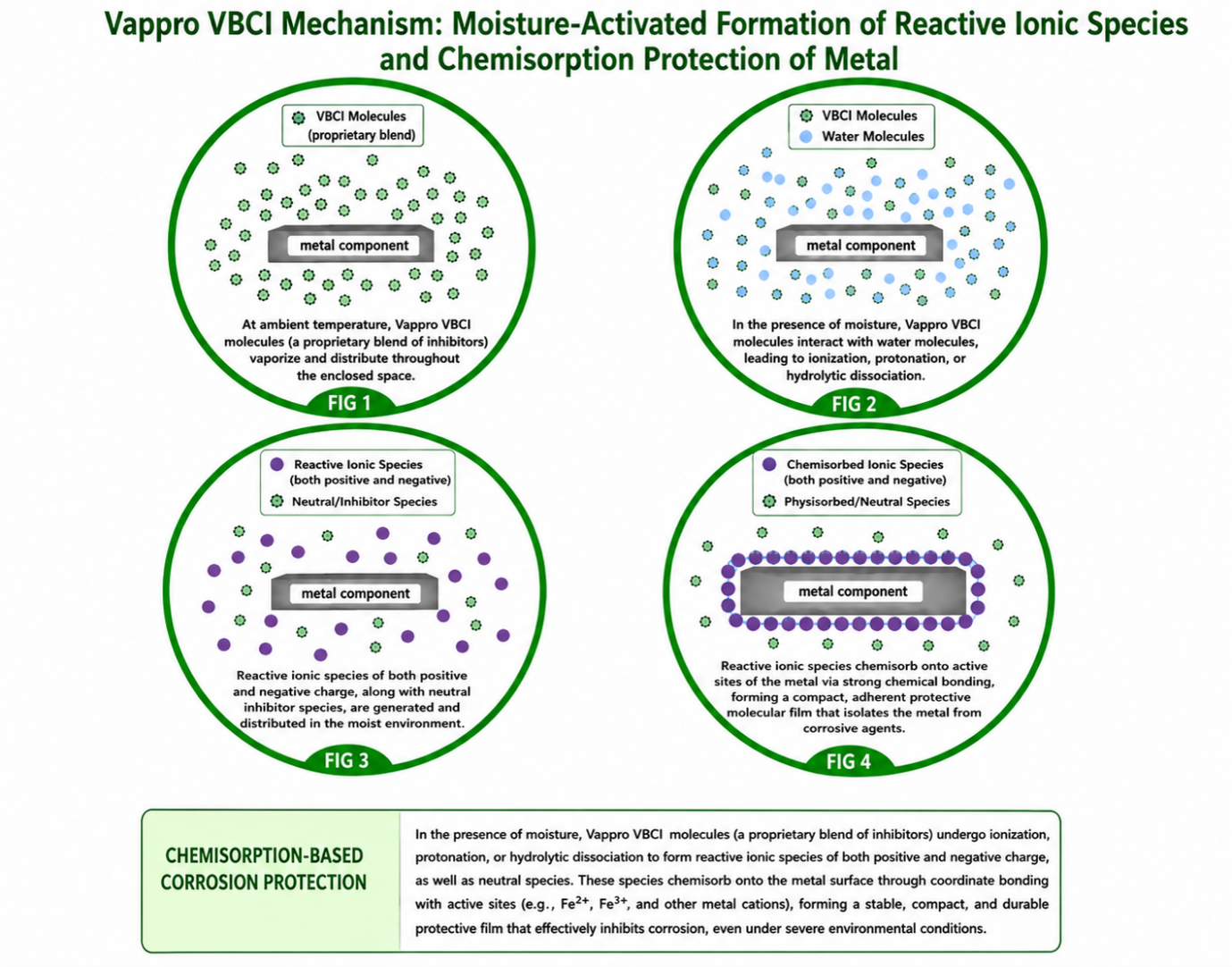
Moisture-activated formation of reactive ionic species and chemisorption protection of metal. 

Why Traditional VCI Is No Longer Enough

Conventional VCI technology protects metal assets by releasing inhibitor molecules that deposit onto exposed surfaces. Today's harsher exposure conditions make this approach less reliable.
Today’s assets face harsher exposure profiles, including:

High humidity cycling environmental condition icon

High humidity cycling

Aggressive chloride exposure corrosion factor icon

Aggressive chloride exposure

Elevated temperatures exposure icon

Elevated temperatures

Condensation events corrosion risk icon

Condensation events

Longer storage durations asset preservation icon

Longer storage durations

Complex equipment geometries corrosion challenge icon

Complex equipment geometries

These conditions expose the key limitation of conventional protection: corrosion control should not only delay rust formation; it should engineer a stable molecular interface between the environment and the metal surface.

A New Molecular Protection Philosophy


Traditional VCI systems rely mainly on weak, reversible physical interactions. Under severe conditions, physically adsorbed inhibitor molecules can desorb from the surface, leaving active metal sites exposed.

Traditional VCI Relies on Weak, Reversible Interactions

Van der Waals forces physical adsorption

Van der Waals forces

Temporary physical adsorption of conventional VCI molecules

Temporary physical adsorption

Electrostatic attraction weak bonding icon

Electrostatic attraction

Humidity-dependent equilibrium deposition model

Humidity-dependent equilibrium deposition

Under severe conditions, physically adsorbed inhibitor molecules can desorb from the surface, leaving active metal sites exposed. When this happens, oxygen, moisture, chlorides, sulfur-containing contaminants, and other corrosive species can accelerate corrosion and reduce asset reliability.

How Instability Leads to Corrosion

Weak adsorption of traditional corrosion inhibitors

Weak Adsorption

Desorption of inhibitor molecules from metal surface

Desorption

Exposed active metal surface vulnerable to rust

Exposed Metal Surface

Accelerated corrosion and oxidation process on metal

Corrosion Accelerate

Vappro VBCI aims to engineer a stable molecular interface between the environments and the metal surface.

How Vappro VBCI molecular corrosion protection platform works

How Vappro VBCI Works

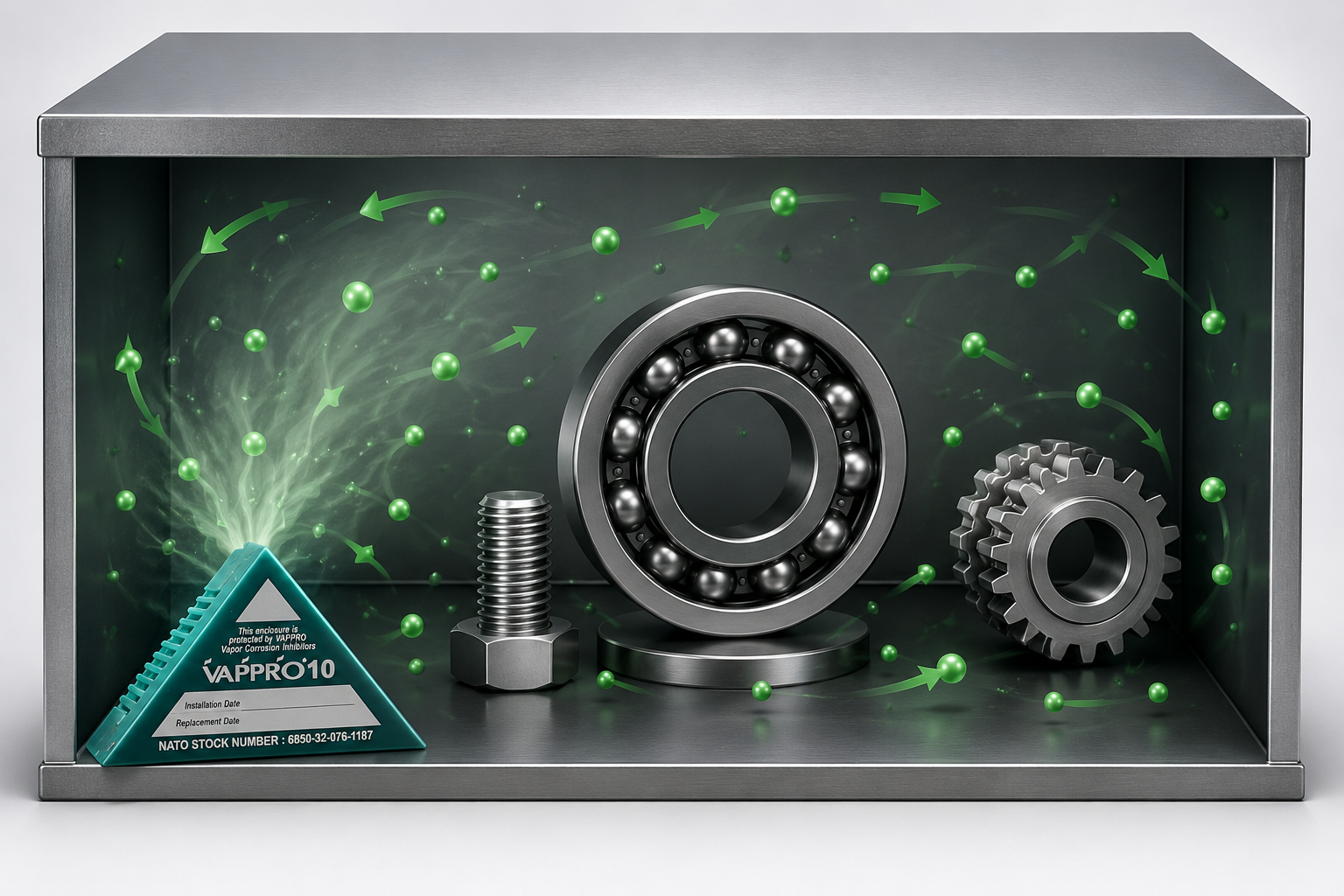
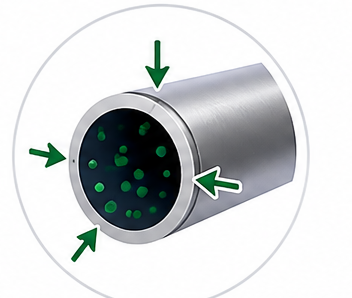
Vappro VBCI uses a proprietary inhibitor architecture designed to create a multi-mechanism protection platform. The molecules vaporize under ambient conditions, distribute throughout enclosed spaces, and reach areas that are difficult to protect with surface-only treatments. 

Protection Process

Vappro VBCI vapour distribution in enclosed spaces

01 - VAPOUR DISTRIBUTION

Vappro VBVCI molecules vaporize under ambient conditions, distribute throughout enclosed spaces.

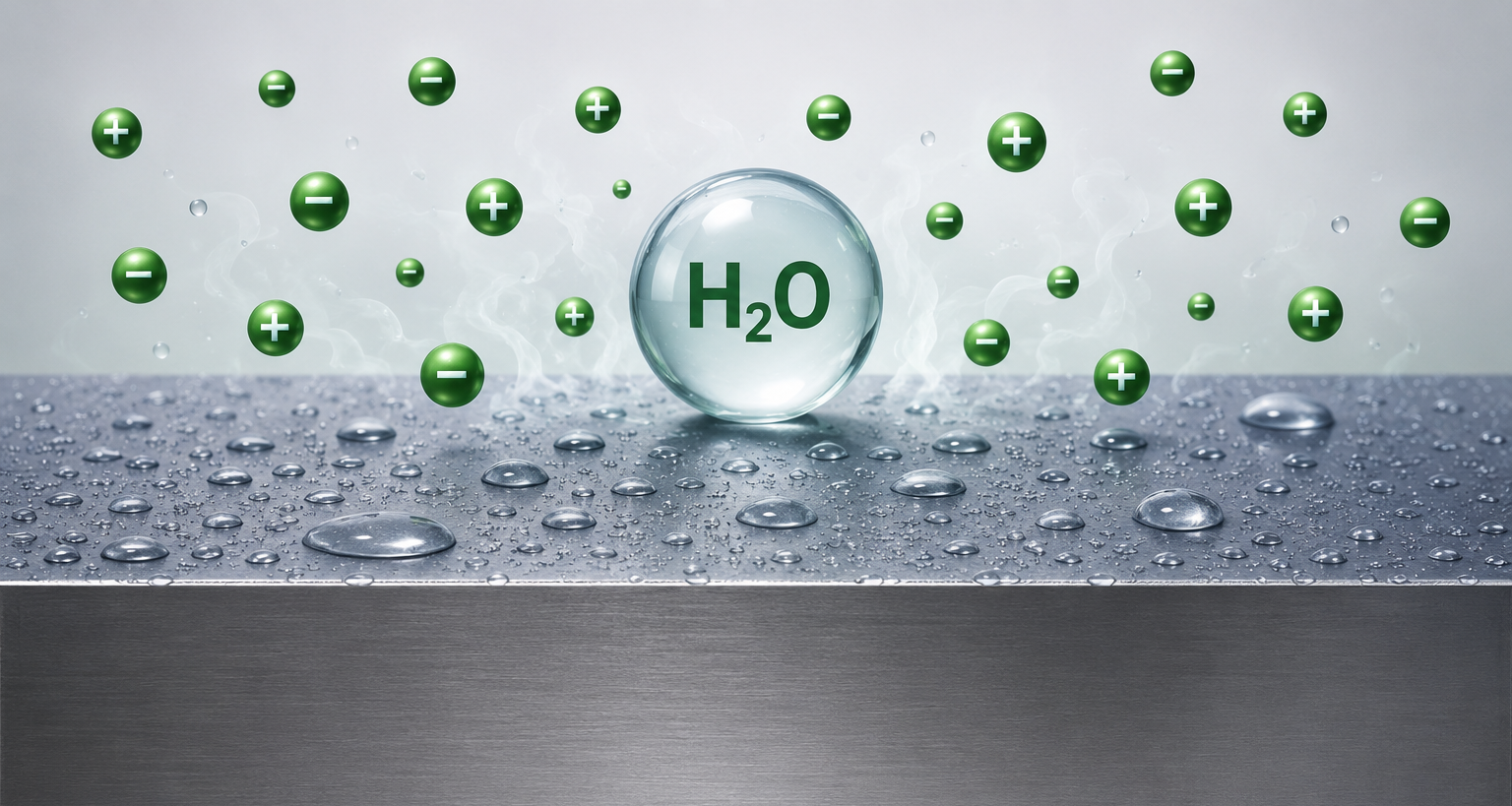
Moisture-activated ionization and hydrolytic dissociation

02 - MOISTURE ACTIVATION

When moisture is present, Vappro VBCI activates through ionization, protonation, controlled hydrolytic dissociation, and molecular activation.

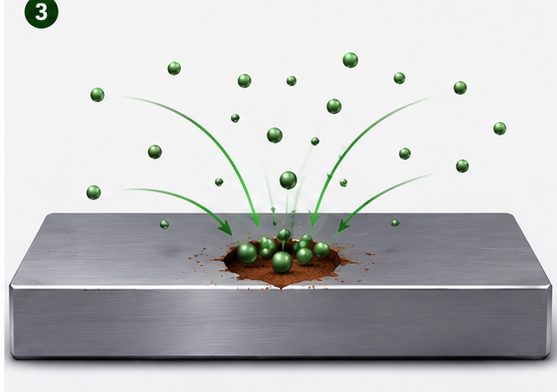
Reactive ionic and neutral species migrating to corrosion sites

03 - REACTIVE IONIC FORMATION

This activation generates reactive ionic and neutral species that migrate toward active corrosion sites on the metal surface.

Chemisorption molecular bond formation on metal substrate

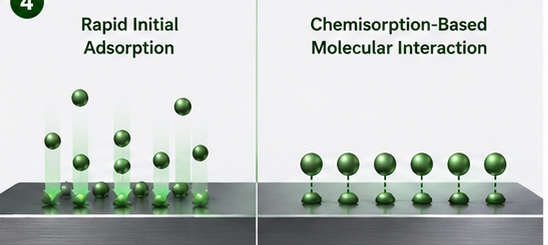
04 - CHEMISORPTION

Unlike conventional systems, Vappro VBCI combines rapid initial adsorption for immediate surface coverage with chemisorption-based molecular interaction for stronger, more persistent protection.

Adherent protective film and passivation layer formation

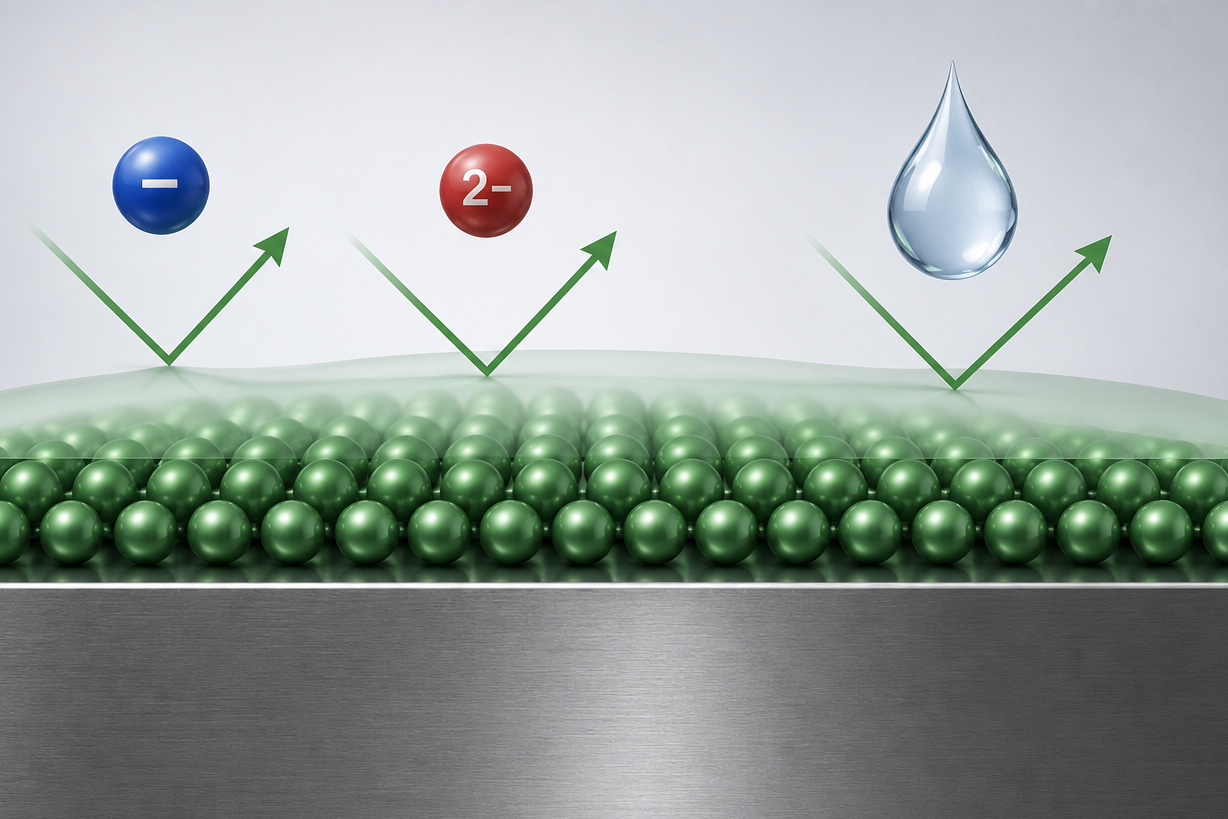
05 - PROTECTIVE BARRIER FORMATION

Activated species help form compact molecular films, adherent protective barriers, persistent passivation layers, and enhanced resistance against aggressive ions such as chlorides.

Anodic and cathodic corrosion reaction suppression

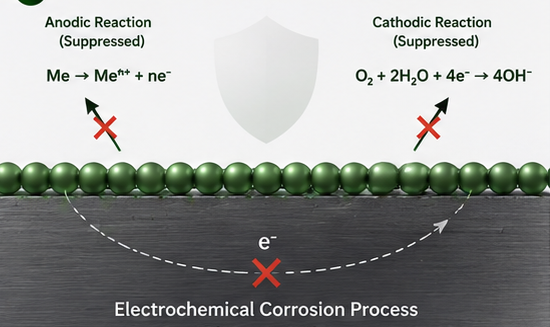
06 - CORROSION REACTION SUPPRESSION

The resulting barrier suppresses both anodic and cathodic corrosion reactions by reducing electron transfer and interrupting the electrochemical corrosion process.

Coverage can extend into:

VBCI corrosion protection inside narrow crevices

Crevices

Vapour corrosion inhibitor coverage in internal cavities

Cavities 

Molecular corrosion protection for hidden metal surfaces

Hidden surfaces 

VBCI vapor coverage for complex equipment geometries

Complex geometries 

Traditional VCI vs Vappro VBCI

Traditional VCIVappro VBCI
Predominantly physisorptionMulti-mechanism adsorption platform
Weak, reversible interactionsStronger chemisorption contribution
Vulnerable to humidity cyclingMoisture-activated protection
Temporary surface coverageStable molecular barrier formation
Susceptible to chloride displacementImproved resistance to aggressive species

In short: Vappro VBCI does not simply place molecules around the metal; it actively engineers the metal interface.

Why It Matters for Global Distribution Partners

Corrosion protection reliability in harsh industrial environments

Greater reliability in harsh environments

Longer-lasting VBCI protection performance icon

Longer-lasting protection performance

Corrosion protection for hard-to-reach inaccessible surfaces

Protection for inaccessible surfaces

Multi-metal compatible vapor corrosion inhibitor

Multi-metal compatibility

Reduced asset maintenance and preservation costs icon

Reduced maintenance and preservation costs

Scientifically differentiated VBCI technology icon

Scientifically differentiated technology

Engineered molecular interaction for the future of corrosion protection

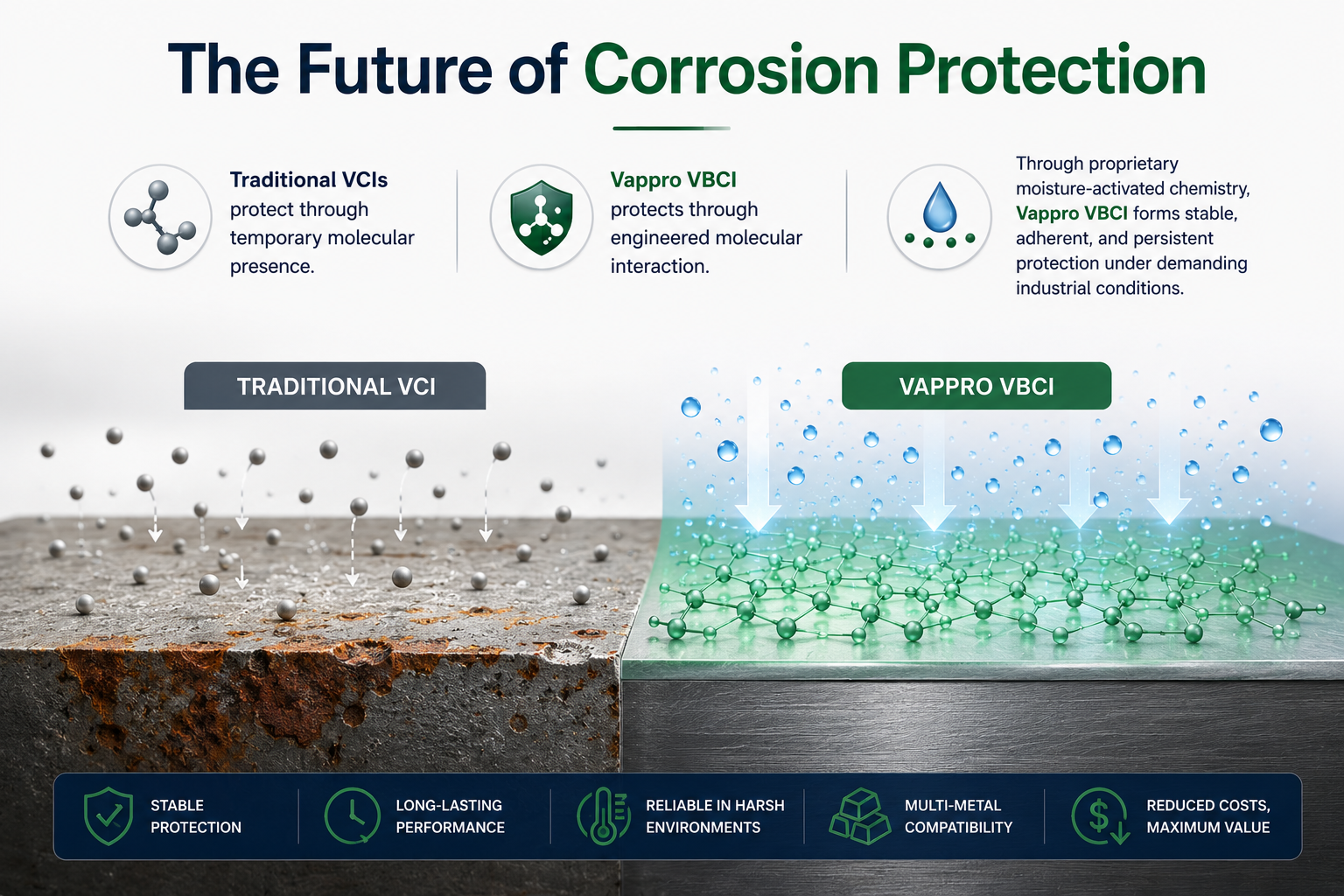
The Future of Corrosion Protection

Traditional VCIs protect through temporary molecular presence.
Vappro VBCI protects through engineered molecular interaction.
Through proprietary moisture-activated chemistry, Vappro VBCI forms stable, adherent, and persistent protection under demanding industrial conditions.